Rais-Ali Delvari Museum reopens after major redesign in southern Iran
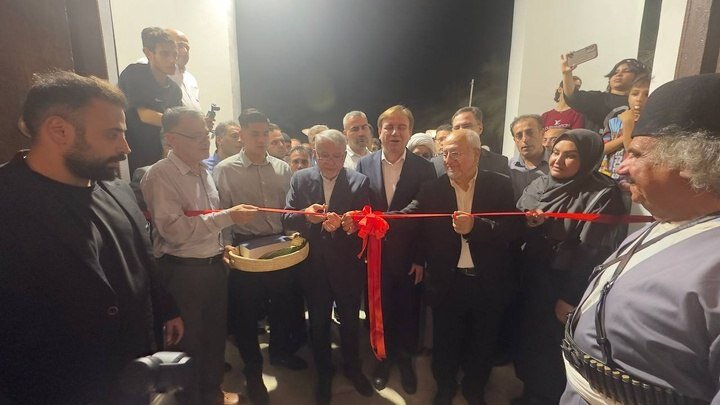
TEHRAN - Rais-Ali Delvari Museum has reopened in the southern city of Delvar following extensive physical and content redesign, with officials describing the museum as a venue for documenting the resistance of local communities against British forces during World War I.
Speaking at the reopening ceremony on Thursday evening, Minister of Cultural Heritage, Tourism and Handicrafts Seyyed Reza Salehi-Amiri said museums serve as part of a nation’s collective memory and provide a platform for revisiting its historical and cultural identity.
Salehi-Amiri stressed the importance of presenting historical narratives accurately and professionally to younger generations as well as domestic and international visitors.
He said the Rais-Ali Delvari Museum had undergone comprehensive renovation and redesign, including the refurbishment of its rooms, revision and translation of exhibition content, landscaping and preparation of its central courtyard.
A newly designed relief wall in the courtyard depicts the history of resistance by Iranians, particularly the people of Tangestan, against British colonial forces. According to the minister, efforts have been made to present the historical narrative in a way suited to contemporary audiences.
Four books focusing on Rais-Ali Delvari, the history of resistance in Delvar and the struggles of the people of Tangestan against British forces were also unveiled during the ceremony.
Salehi-Amiri said museums need knowledgeable and capable narrators who can communicate historical subjects clearly and engagingly.
“Rais-Ali Delvari” has become part of the popular cultural memory of people in southern Iran and Tangestan, he said, adding that the museum could serve as a center for revisiting this historical identity and passing it on to future generations.
The minister also highlighted Bushehr’s historical significance as a center of resistance in modern Iranian history, saying the region’s heritage could be incorporated into new cultural tourism products.
He suggested turning the history of southern Iran’s resistance to foreign powers into a subject for research and tourism, using museums, storytelling, cultural tourism and specialized programs to present it to different audiences.
Salehi-Amiri also outlined the ministry’s plan to expand coastal and maritime tourism, saying Iran’s southern coastline, from Chabahar and Makran (or Makkoran) to Hormozgan, the Persian Gulf islands, Bushehr and Khuzestan, could be developed as an interconnected tourism corridor.
He said investment in accommodation facilities, piers and tourism services, along with the expansion of maritime tours, could help local communities and the economy of Bushehr benefit from the region’s coastal potential.
Rais-Ali Delvari (1882–1915) was a military leader and a prominent figure in Iran’s resistance to British forces following the occupation of Bushehr in 1915, during World War I. Iran had declared neutrality in the war.
Born in the port city of Bushehr, Delvari organized resistance in Tangestan after British forces occupied Bushehr and Delvar. He was killed on Sept. 2, 1915, aged 33.
His former house in Delvar, near Bushehr, was previously converted into an ethnological museum. The collection includes some of his personal belongings and historical documents, as well as firearms and horse equipment.
AM
Leave a Comment